
Today, properties are increasingly managed with data. Yet one of the fastest-growing user groups is still often excluded from decision-making — simply because it does not appear in occupancy reports or workspace analytics. That group is visitors.
Visitor data is one of the most underutilized sources of insight in property management, even though it helps anticipate building load, resource needs, and safety-critical situations. In this article, we explore where visitor data comes from and how it benefits modern workplace and property management.
Who counts as a visitor?
Often only external meeting guests are counted as visitors. From a property management perspective, visitors include everyone who enter the building without being permanently based there: employees from other locations, contractors, maintenance personnel, service providers, etc. in addition to traditional business guests. When the visitors are defined correctly, you gain a realistic view of the building’s people flow.
Visitor volumes are growing rapidly
Over the past few decades, visitor volumes in Finland have steadily increased — excluding the pandemic years. During COVID, face-to-face meetings dropped to a minimum. But the rebound has been strong. Comparing 2020 to 2025, visitor volumes in Finland have increased sixfold, a trend that’s reflected in our customer data.
In recent years, visitor volumes across our customers have grown at an average annual rate of around 14% — in some industries, even faster. People have returned to offices in large numbers. This means higher utilization of spaces and building services.

But growth does not appear like a smooth upward curve. Instead, it has distinct peaks. Visits concentrate on specific weekdays and seasonal periods. A 14% annual increase translates into much higher load during peak hours — when buildings may host twice as many people compared to quieter days.
Peak periods reshape how properties are used
On a general level, visitor data shows clear patterns. For example, remote work is more common at the beginning and end of the week. Face-to-face meetings cluster in the middle. For many properties, Wednesday and Thursday are the most intense days — placing the greatest strain on reception, security services, and shared facilities.

Within the day, visits often peak in the morning. When most guests arrive at the same time, clear traffic spikes occur. This affects both the visitor experience and the daily operations.
Therefore, managing a building effectively requires proactive planning. Staffing levels must be planned according to peak demand, not by averages. The allocation of meeting rooms and shared spaces, as well as the timing and availability of services, should be aligned with actual visitor peaks.
A key insight for all property decision-makers is that visitor volumes are increasing significantly year by year, and it’s worth preparing for this in advance. This also reinforces the fact that remote workers are returning to offices in growing numbers, even though public discussion often highlights the opposite perspective. It’s great to see people wanting to meet face-to-face again!


How do you manage property with visitor data?
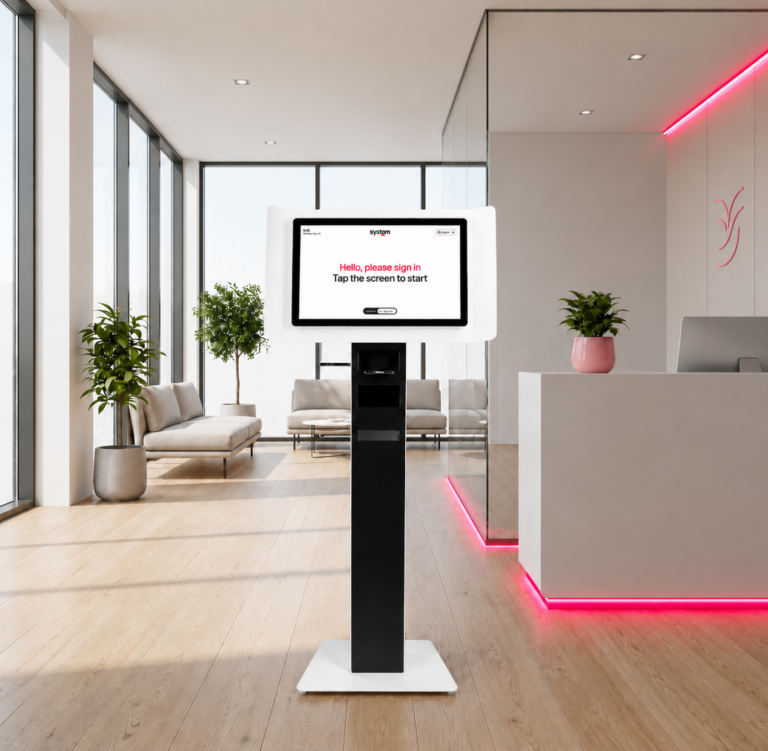
Visitor data does not appear automatically. To collect it systematically, a visitor management solution must be implemented — enabling structured and secure sign-ins and outs for every visitor entering the building. With this data, property usage can be analyzed based on actual people flow rather than assumptions from desk or room occupancy metrics.
With real-time visitor data available on a yearly, monthly, and daily level, it becomes possible to form a clear overall picture of when the property is at peak load and when it is underutilized. In addition, visitor data helps allocate staff resources to the right place at the right time.
While nationwide visitor trends are visible across many commercial properties, every organization has its own, constantly shifting peak times. Understanding these is essential when managing property services based on data rather than assumptions.
The most advanced organizations use visitor data in operational decision-making: it helps optimize, for example, lunch demand and the allocation of front desk staff tasks. However, this is not just about efficiency—it’s above all about ensuring that every visitor enjoys a smooth and high-quality experience, even during peak times.
Let our experts help
We at Systam see every day how much value visitor data can bring. When data is reliable, real-time, and easy to analyze, it becomes a strategic tool rather than just another monthly report. Organizations that integrate visitor data systematically into decision-making make better, more informed choices — both from a property management and business perspective.
If you are thinking about how to make better use of visitor data, we are here to help. Alongside Finland’s most widely used visitor management solution, we provide the expertise to help you turn insight into action.